



The 180 Day Rule: Why August Is When You Should Be Counting Your Days in Thailand
Most people move to Thailand thinking about visas. Very few move here thinking about tax. Then somewhere around the middle of their first year, someone mentions the 180 day rule and the whole conversation changes.
August is the month to pay attention. If you arrived in January and have not left, you have already crossed the line. If you arrived later, you are close enough that the math matters.

What the 180 Day Rule Actually Says
Thai tax residency comes down to one number. If you spend 180 days or more in Thailand within a single calendar year, running 1 January to 31 December, you are considered a Thai tax resident for that year.
That is it. It is not about your visa type. It is not about whether you work for a Thai company. It is not about whether you hold a work permit. A retiree, a remote worker on a DTV, a student on an education visa and someone stringing together tourist entries are all measured the same way. Days in the country is the test.
The days do not need to be consecutive. They are totalled across the whole calendar year.
What Changes If You Cross It
Tax residency changes how foreign income is treated.
Someone who is not a Thai tax resident is generally taxed only on income sourced in Thailand.
Someone who is a Thai tax resident may have Thai tax obligations on foreign income brought into Thailand. Under rules applying to income earned from 1 January 2024, assessable foreign income remitted into Thailand by a tax resident can fall under Thai personal income tax, which runs on progressive rates.
Remitted means moved into Thailand, and that is broader than most people assume. Depending on the circumstances it can include bank transfers, ATM withdrawals here and card spending here.
Income earned before 1 January 2024 has been treated differently, and there has been active discussion about easing the treatment of income remitted within a shorter window after it is earned. Some of that is still moving, which is exactly why you want to know where you stand rather than guess.
Why This Is Not a Reason to Panic
Being a Thai tax resident is not automatically a bill. It is a status that triggers a set of questions.
The questions that matter are these. How many days have you actually been in Thailand this calendar year? What money are you bringing into the country, and when did you earn it? Does your home country have a double taxation agreement with Thailand, and how does it apply to your situation? Can you show where your funds came from and when?
That last one is the one people neglect. The responsibility for showing where money came from sits with you.
What To Do This Month
Count your days. Go through your passport stamps and entry records and get a real number for 2026 so far.
Track it going forward. A note on your phone with every entry and exit date is enough.
Keep your records. Bank statements, income documentation, and evidence of when funds were earned.
Keep your money organised by when it was earned rather than mixing everything into one account.
Speak to a qualified Thai tax professional if you are near or over the line and bringing money into the country. This is the one area where guessing costs the most.
The Honest Version
Thailand is still one of the best places in the world to build a life on a remote income. That has not changed. What has changed is that the informal era is over. Rules are being applied more consistently, and the systems that share financial information across borders already exist.
Nobody enjoys thinking about this. But the expats who have the smoothest experience here are the ones who treated tax as part of the plan rather than a surprise that turned up in year two.
This article is general information, not tax advice. Rules change and every situation is different, so speak with a qualified Thai tax professional about your own circumstances.

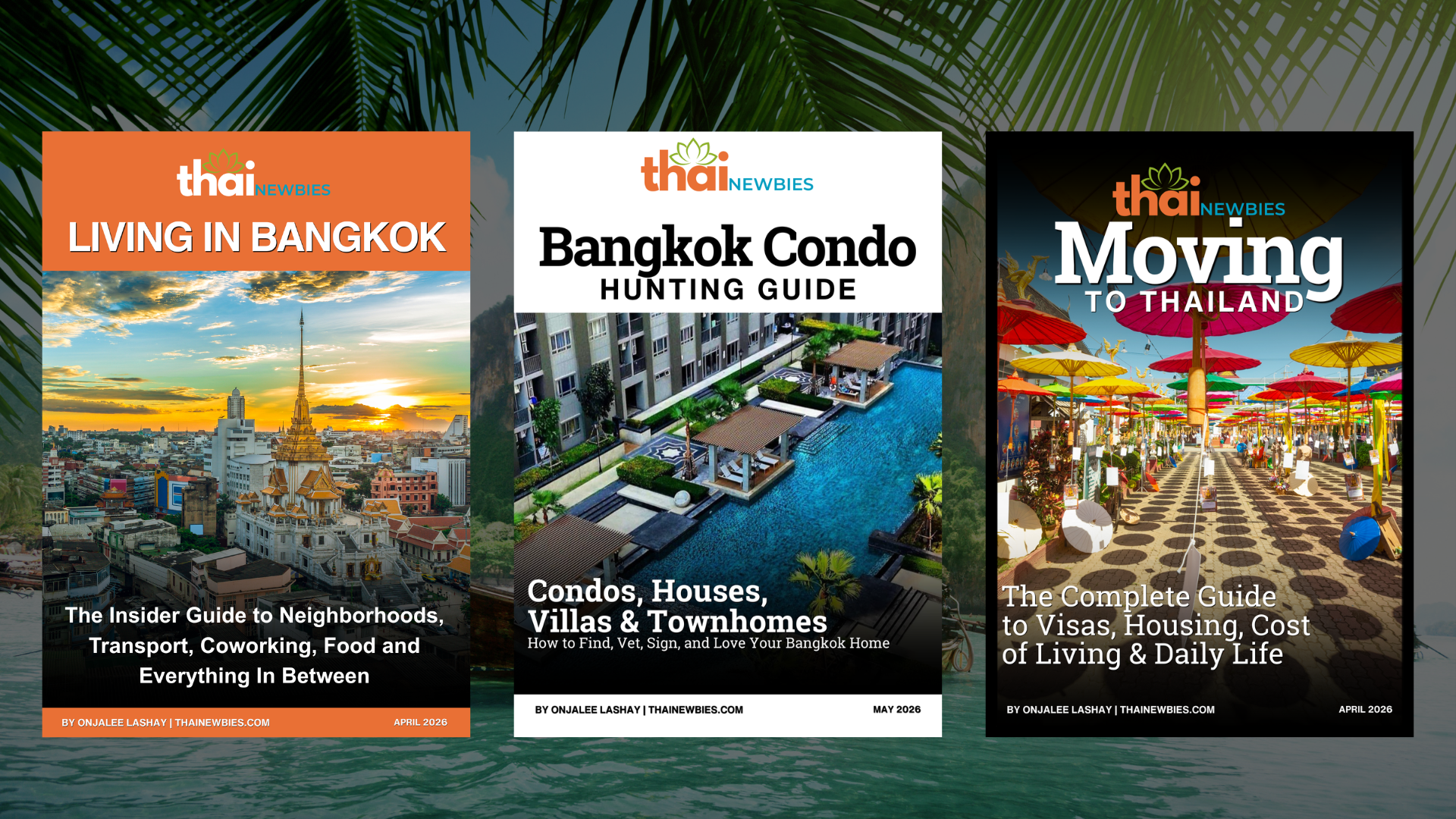
Your Thailand Guides Are Waiting
Ready to skip the guesswork? Our digital guides give you everything you need to move to Thailand and live in Bangkok with confidence. The Moving to Thailand Complete Guide covers visas, flights, what to pack, banking, SIM cards, and everything you need before and after you land — all in one place.
The Living in Bangkok Guide breaks down neighborhoods, cost of living, transportation, healthcare, and daily life so you know exactly what to expect before you arrive.
Both guides are instant PDF downloads — no waiting, no fluff, just real information from people who actually live here.

Bangkok always has something going on — and that is honestly one of the best parts of living here. Check back every week for a fresh guide. Follow us daily for more tips — we are Thai Newbies on all social channels!
🌐 Website: www.ThaiNewbies.com
📸 Instagram instagram.com/thainewbies
🎵 TikTok: tiktok.com/@thainewbies
📘 Facebook: facebook.com/thainewbies
▶️ YouTube: youtube.com/@ThaiNewbies
New to Bangkok or planning a move? Download our guides at ThaiNewbies.com.